Wednesday, August 19, 2015

Bad Vibrations


I had the good fortune to see Brian Wilson perform live this summer with both Al Jardine and Blondie Chaplin.  The show reinforced the brilliance in all eras of the Beach Boys' career.  However, you can't ignore the fact that there are essentially two factions of this band touring at the moment, the Brian Wilson Gang and the Mike Love-Bruce Johnston Gang.  Between this odd occurrence and seeing the intense Brian Wilson biopic, Love and Mercy, I began to think that one could write an entire scholarly book on the various legal and business disputes that the Beach Boys have been involved in over the past half century. 

            I don't think I will ever have the time to go down that rabbit hole but I did come across an interesting case while doing some research for a client involving the aforementioned Al Jardine. 

            A decade ago the internet was abuzz with the news that Mike Love had supposedly sued Al Jardine to keep him from using the name "The Beach Boys" to promote a solo tour.  The case, Brother Records, Inc. v. Al Jardine, turns out to be a bit more complicated than that.  Each founding member of The Beach Boys (or, in the case of Dennis and Carl, their estates) is a shareholder in Brother Records, Inc.  Recognizing that The Beach Boys' trademark was a valuable asset but also that some of the surviving members did not want to tour (or tour together), the corporation decided in 1998 that each member could have a non-exclusive license to tour using the "Beach Boys" name if certain terms and conditions were met – Mike Love took a band on the road under those terms. 

            Apparently, Al Jardine decided that if he used a variation of the name, "Beach Boys Family and Friends" he could tour either without a license or upon a different royalty arrangement with the corporation. 
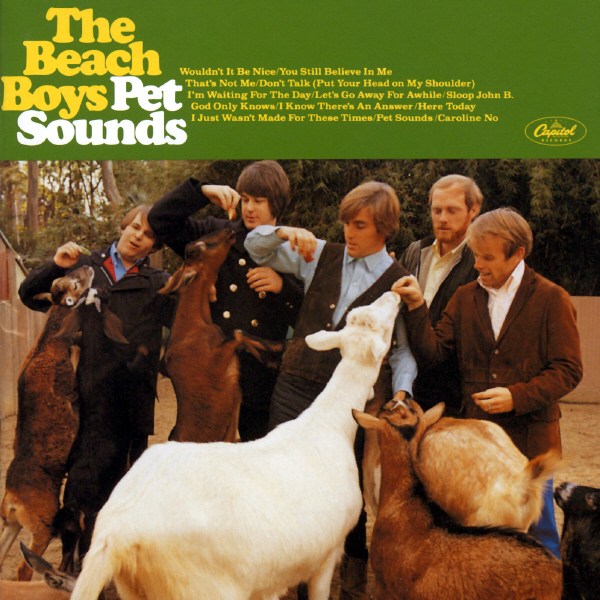
            Jardine's group played several cities where Love's group also performed and there was actual confusion in the marketplace. After some negotiation, Brother Records, Inc. sued Jardine for trademark infringement to stop using the “Beach Boys” trademark.   It is important to note that during this time Jardine was (and presumably still is) a shareholder in Brother Records, Inc. 

            Jardine's defense as one would expect it to be, was fair use (both traditional fair use and the variation – nomative fair use).  As any law student can tell you "fair use" was not a truly viable defense in this case because the trademark was not being used in its descriptive sense; what the court so eloquently described as "boys who frequent a stretch of sand beside the sea" but rather "in its secondary trademark sense which denotes the music band – and its members that popularized California surfing culture."

            Thus, Jardine tried to use the more complex "nominative fair use" defense. As the court states," the nominative fair use defense acknowledges that it is often virtually impossible to refer to a particular product for purposes of comparison, criticism, point of reference or any other such purpose without using the (underlying) mark".  As the case law suggests, Jardine would not necessarily have a problem referring to the historical fact of his membership in The Beach Boys but the court found that his use of the mark in this particular manner "capitalizes on consumer confusion" and suggests some kind of "sponsorship or endorsement" by the trademark holder. 

            I think the Court was right.


            As easy as it can be to often cast Mike Love in the role of the bad guy in Beach Boys' mythology, it seems that in this case the corporation (whether controlled by Love or not) took a very important step in protecting its trademark rights to avoid dilution of the mark.  As such, this case adds to the growing body of law that practitioners often have to turn to in order to deal with band members and their trademark issues.  Despite all this, one must also remember that Al Jardine performed with Mike Love, Brian Wilson, Bruce Johnston etc.on The Beach Boys' 50th Anniversary Tour a couple of years ago.   The California saga continues. 


Wednesday, July 15, 2015

Conservatorships


            The recent news that Joni Mitchell's close friend had been appointed her conservator after she suffered an aneurysm as well as the disturbing news that there is a conservatorship battle being waged over former Eagles member Randy Meisner made me realize that the public might not be completely aware of this legal concept.  You can also see an extreme example of this a conservatorship in the Brian Wilson biopic "Love and Mercy". Conservatorships are court ordered arrangements where one individual is appointed to oversee the financial affairs and some time day to day responsibilities of another person who can no longer take care of himself or herself. Although we tend to associate conservatorships with elderly people, that is not always the case.

            In Tennessee the law governing conservatorships, T.C.A. Sec. 34‑3‑101 provides that a petition to appoint a conservator may be filed by any person having knowledge of the circumstances necessitating the appointment of a conservator.  This is important because it allows for the process to be instituted even when a "disabled person" might not be aware that they need a conservator (or might actively rebel against the idea) or, when a family member might be somehow endangering the person.

            The statute requires very detailed pleading and requirements including examination by a physician or psychologist and a requirement that a guardian ad litem be appointed to represent the rights of the "disabled person".  If the court determines that a conservator is necessary it follows a prioritized list to determine who to appoint as conservator.

            Some  rights, but not necessarily all rights, might be removed by the conservatorship including the right to dispose of property, execute contracts, make purchases or consent to medical treatment.  Also, as is apparently the case in the Joni Mitchell conservatorship the court can make one person conservator of the disabled person's "person" and another individual the conservator of his or her property and finances.  I have seen this type of conservatorship firsthand and can attest that it does a lot to diffuse concerns and suspicions that family members may have over the appointment of a conservator.

            There has been a lot of controversy over conservatorships. We have all heard horror stories of how the system has been abused but we seldom hear of conservatorships that worked well.  Having been involved in several conservatorships, I can tell you that this is a system that is set up to try to handle a difficult situation with care and compassion.  I  served as the court-appointed conservator for a well-known songwriter (and later his spouse) for nearly 14 years and it was a difficult but ultimately rewarding experience.  I had to overcome mistrust and suspicion and the  general awfulness of seeming to invade another family's privacy in the worst possible moment.  The experience gave me a great deal of respect for the people who are called upon to undertake this role and the judges who oversee the process.

Sunday, June 28, 2015

The Legal Perils of Co-Writing


Recently I seem to be inundated with legal questions about co-writing.  I am not sure why this has not really come up before.  I suspect that it is because the concepts or “rules” of co‑writing are ingrained and institutionalized within the Nashville music publishing community but I can tell you that this is not the case elsewhere. There is a great deal of misunderstanding and miscommunication out there.

 Let’s start at the beginning  – what is a co-written composition?  Under the Copyright Act a co‑written composition is a “joint work” and the definition is important:  A “joint work” is a work prepared by two or more authors with the intention that their contributions be merged into inseparable or interdependent parts of a unitary whole.

 The key concept here is that the authors must have an intention to create a unitary work.  However, once that work has been created one of the co‑writers cannot unilaterally decide to remove their contribution.  The work exists and each collaborator is an owner.  This also means that each author has an equal right to exploit the work, subject only to a duty to account to his or her collaborators.

 I can only think of one occurrence in the past three decades where I was asked to help a writer “unwrite” a song – where we literally created an agreement between two co‑writers which removed one writer’s creative contribution from a finished work.  I can also tell you it was messy.

 Also, if two or more persons are joint authors of a musical composition then this means that one of the writers cannot decide to add a co-writer without the other’s permission. This seems like common sense but it is amazing how this can become convoluted and confusing during the creative process. I know that this is a huge issue in the urban/hip hop world,

 In another odd issue that came up recently, I had to explain that one co-writer cannot force a collaborator to continue to work on a song.  One writer may decide that the work is finished where their collaborator may want to continue to re-write the song. From the legal perspective, does this mean that the song is not a true joint work because one of the writers lacked intent?  I don’t think there are any real rules on this.  I have asked a number of Nashville writers about this and the consensus seems to be that if all parties believe that the song is good then it is worthwhile to keep putting time and effort into it; if not, you just move on and don’t worry about it.  Not every song can be “Yesterday”.

 Another potentially contentious area is expenses.  What if one writer wants to create a demonstration recording of the song and the other does not?  Again in the Nashville publishing world there seems to be a fairly clear-cut system that details how and when demos get made and how publishers divide expenses for demo costs; but even this system is subject to misunderstanding.  Outside of “professional” circles it is clear that there are no rules – written or otherwise that obligate authors of a musical composition to have to split the cost of demonstration recordings or any other costs for that matter and this seems to be an area of confusion.  I have had writers ask me if they can “force” their co-writers to pay demo expenses or other expenses and the answer (in the absence of an agreement) is no.

  I would suggest that anybody contemplating a co-writing situation, outside of the traditional Music Row system, sit down with your prospective collaborator first and have a serious discussion about these types of issues.  It will save a great deal of time, expense and angst in the end.


Monday, May 11, 2015

The Forest, the Trees and The Songwriters Equity Act of 2015


Often,  I can’t see the forest for the trees.  For some reason an article from a December, 2014 issue of The Tennessean showed up on my radar today.  The article, by Nate Rau was ostensibly about a band called The New Dylans but in reality it was about the decline of the music industry's middle class. I don’t know why I missed this the first time but it hit home today.

            Everyone who works in the music business or in a related field knows this.  The article focused upon the disappearance of the staff songwriter – the writer who receives a publishing advance to write songs for a music publisher.  We all know that these jobs are going away but the article contained a stark figure:  according to the Nashville Songwriters Association International, the number of full-time songwriters in Nashville has declined by 80 percent since 2000.  To quote Rau, "NSAI chalks up the decline of the songwriting profession to the rise in music piracy, the loss of album sales and the increase in popularity of consumption models like streaming that don't pay songwriters as well."

            Okay got it.  The part of the puzzle that I've been ignoring is that the newly reintroduced Songwriter Equity Act of 2015, a bill currently pending before Congress has the potential to remedy this situation somewhat.  It is easy to tune this out in the constant battle between the performing rights organizations, Pandora, Spodify, record companies, et cetera but the bottom line is that somewhere in the developments of the past 20 years or so, copyright owners and songwriters got screwed and this bill may be the first real shot to remedy that.

            The bill addresses two key sections of the Copyright Act: Section 114(f) and 115.  In Section 114, performance royalties are set by federal rate courts and for some byzantine reason, these courts are currently forbidden from reviewing evidence of sound recording royalty rates when setting rates for songwriters and composers.  For this reason, music publishing owners receive less money than sound recording owners when a song is "streamed."  Maybe there is some empirical reason that the rates are not equal but to not allow evidence of the sound recording rates is just weird and wrong. 

            The proposal to amend Section 115 of the Copyright Act is even more interesting.  The bill proposes to change the compulsory licensing statutory rate, which is currently set by the Copyright Royalty Board according to a schedule first devised in 1909 to a formula that considers market value or "rates and terms must clearly represent the rates that would have been negotiated in the marketplace between a willing buyer and a willing seller."

            In a related move, major publishers have been slowly but surely moving away from BMI, and ASCAP in order to license their works directly to these new broadcasters. Entrepreneurs like Irving Azoff are setting up their own performing rights agencies. This is so complicated that I wasn’t sure how I felt about it until I realized that if the majors stay honest and account to their writers, this can only help the songwriter.

            Surely the stakeholders who will be most affected by these changes will continue to try and block them but consider for a minute what applying free market standards to the statutory royalty rate might do (cynically, all lawyers know what this will do the controlled composition clause of a recording agreement) or if Pandora and Spotify had to pay publishers as much as it does sound recording owners.  The idea that songwriters might get a fair shake is really appealing to those of us who work with them.  This is a serious issue which needs to stay in front of Congress and I'm happy to see Tennessee's representatives on both sides of the aisle supporting the legislation.  This is a good time to become involved in the process.

Sunday, April 26, 2015

You Gotta Have a License


This story would be funny if the underlying topic was not so serious and important.


I was recently interviewed by a reporter for the Atlanta Daily Report for a story regarding a local organization that had to take down a video on a website devoted to the cause of suicide prevention.  The reason for the takedown was that the organization was using a version of the Fray’s hit song “How to Save a Life” without obtaining a license from the band’s music publisher Sony Music.  Despite the organization’s worthy public service goals they could not utilize a version of the song in the video without negotiating a synchronization license. The video itself dealt with raising awareness of lawyer suicide, which I learned is a very real and serious problem; quite possibly an epidemic.

I don’t know how this association ran into this problem in the first place.  It could be that they made the common mistake of thinking that the Fair Use exception in the Copyright Act covers all non‑profit uses of music; it does not. I am routinely contacted by non-profit organizations or other services who are seeking advice in using music to promote their various causes and they are often surprised to learn that there is a cost associated with the use. The fact that a proposed use is non-commercial is only one of the four elements of the fair- use analysis in the Copyright Act.

The ironic part of the whole story is that the organization in question was  the State Bar of Georgia – and I poked fun at them by saying  “there are a lot of talented entertainment lawyers in Atlanta”. However, the Bar should be applauded for bringing this serious issue to light.