
Showing posts with label trademark. Show all posts
Showing posts with label trademark. Show all posts
Wednesday, June 13, 2018
Coming Attractions
I was recently in Havana, Cuba. A friend pointed out this poster for an upcoming gig by the Baquestri-Bois. I started thinking about all of the trademark implications until I remembered, oh yeah...you're in Cuba.


Wednesday, August 23, 2017
Jimmy Buffet, Marijuanaville and the Likelihood of Confusion
 I don't
know Rachel Bevis, but I feel nothing but empathy for her. Back in March, she lost an opposition
proceeding before the United States Trademark Appeal Board which will
presumably keep her from being able to use the trademark
"Marijuanaville" for merchandise such as t-shirts and for drive
through retail services. It was a catchy
name and a good idea for a possible trademark and, as one might expect,
Ms. Bevis was stopped by Jimmy Buffett, whose company Margaritaville
Enterprises, LLC. has owned the trademark "Margaritaville" for
"clothing, namely shirts, sweaters, sun visors, and caps” as well as “nightclub
services, retail clothing, gift and souvenir store services and mail order
services" since 1991.
I don't
know Rachel Bevis, but I feel nothing but empathy for her. Back in March, she lost an opposition
proceeding before the United States Trademark Appeal Board which will
presumably keep her from being able to use the trademark
"Marijuanaville" for merchandise such as t-shirts and for drive
through retail services. It was a catchy
name and a good idea for a possible trademark and, as one might expect,
Ms. Bevis was stopped by Jimmy Buffett, whose company Margaritaville
Enterprises, LLC. has owned the trademark "Margaritaville" for
"clothing, namely shirts, sweaters, sun visors, and caps” as well as “nightclub
services, retail clothing, gift and souvenir store services and mail order
services" since 1991.
One can
argue the wisdom of a pro se trademark applicant going against Jimmy Buffett
and his very talented lawyers. However, even when a trademark applicant does
not have to deal with a famous and well protected registrant on the
other side, the applicant has to deal with the decisions of the trademark
examiner which can often seem arbitrary . This seems to happen when one has to confront a claim of "likelihood of confusion"
and the case In Re: E.I. . du Pont de
Nemours & Co. , 476 F2d 1537 which the trademark office often relies upon
in deciding whether one potential mark
is likely to be confused with another registered mark.
The court in this
case outlined 13 specific factors to consider with a likelihood of
confusion claim:
- The similarity or dissimilarity of the marks in their
entireties as to appearance, sound, connotation and commercial impression.
- The similarity or dissimilarity of and nature of the
goods or services as described in an application or registration or in connection
with which a prior mark is in use.
- The similarity or dissimilarity of established,
likely-to-continue trade channels.
- The conditions under which and buyers to whom sales are
made, i.e. "impulse" vs. careful, sophisticated purchasing.
- The fame of the prior mark (sales, advertising, length
of use).
- The number and nature of similar marks in use on
similar goods.
- The nature and extent of any actual confusion.
- The length of time during and conditions under which
there has been concurrent use without evidence of actual confusion.
- The variety of goods on which a mark is or is not used
(house mark, "family" mark, product mark).
- The market interface between applicant and the owner of
a prior mark:
(a) a mere "consent" to register or use.
(b) agreement provisions designed to preclude confusion, i.e. limitations on continued use of the marks by each party.
(c) assignment of mark, application, registration and good will of the related business.
(d) laches and estoppel attributable to owner of prior mark and indicative of lack of confusion.
- The extent to which applicant has a right to exclude
others from use of its mark on its goods.
- The extent of potential confusion, i.e., whether de
minimis or substantial.
- Any other established fact probative of the effect of
use.
A review and analysis of these factors can be overwhelming and in complex cases, can involve a substantial amount of data. Most
lawyers who handle trademark registrations for clients have come up against
this case and its list of factors. One
cannot always predict whether a trademark examiner may decide that two marks may
be so alike as to cause confusion, or more frustratingly, to decide that even though the marks may be
different and the goods or services at issue may be different, their existence
in the same "channels of trade" may cause confusion. I had this happen once with a rock band whose
name was similar to a video game and once with a record company whose name was
similar to that of a band.
In my
experience, it can be very difficult to overcome the factors in the du Pont case and again the frustrating
part of this is that even with the due diligence of a comprehensive trademark
search (which is not cheap) these objections cannot always be predicted in
advance.
I should
point out that in some instances it is possible to get the registered trademark
owner to agree to a "co-existence agreement" manifesting no objection
to the similar marks. The trademark
office will usually recognize but the stars really have to align in a case like
that.
The best advice prior to applying for registration is to do
a comprehensive search and then tread carefully.
Monday, September 21, 2015
Firefly and Fan Art
 Have you ever seen Firefly? Yeah, me neither. In fact, the only way I know about the TV
show was through my wife and her super smart friends. Nevertheless, I was fascinated to read about
a legal skirmish that had broken out over a particular orange and yellow ski
cap that one of the show's characters wore.
Have you ever seen Firefly? Yeah, me neither. In fact, the only way I know about the TV
show was through my wife and her super smart friends. Nevertheless, I was fascinated to read about
a legal skirmish that had broken out over a particular orange and yellow ski
cap that one of the show's characters wore.
Apparently,
fans of the short-lived show began knitting copies of this cap and selling them
on such websites as Etsy and Café Press leading Fox Television to send cease
and desist letters to the sellers because sales of the homemade caps were
interfering with their own licensed version of the cap.
An article
in last month's American Bar Journal by Anna Stolley Persky explored the whole complex
area of fan art – where the
desires of obsessive fans to replicate artwork from their favorite movies,
books or television shows runs into
copyright infringement claims from the creators of those works. All of this is a little vague. For example, can a yellow and orange cap
actually be capable of copyright protection?
Even so, is the fan's creation a derivative work or a protected fair
use?
This
reminds me of stories I heard when I was younger of the Walt Disney Company
going after mom and pop bakeries who innocently put Mickey Mouse on a birthday
cake or ASCAP going after the Girl Scouts for singing songs around the campfire
without a license. It is an interesting dilemma for all parties. One thing a copyright owner must consider is
that by trying to stop the fans from creating fan art they risk alienating
their fan base. Also, this is a question
of degree – I still can't fathom why Fox would have a problem with a
guy selling a Firefly inspired cap but
I can of course understand by DC Comics would sue to stop the sale of
unauthorized Batman costumes.
The article
ends with two very good pieces of advice for those who want to create and
market fan art. Quoting
Attorney Ruth Carter, the author states:
First, don't base your entire business
on using somebody else's copyrighted work without permission; and
Second look at the history of the
copyright holder: Does he or she have a record of going after people who make
fan art?
This is
sound advice (especially the first part!) because at the end of the day if a copyright
holder (or trademark owner) has the will and the resources to stop the
distribution of fan art, all of the fair use arguments in the world will be of
little practical value. I remember that
years ago I represented a gentleman who was marketing a piece of memorabilia associated
with a
recently deceased celebrity. He had
received a very serious cease and desist notice. Because of the facts of the
case my client had some strong arguments on his side. When I made these
arguments to the estate’s lawyer, he
politely listened and then invited me to review the list of recent litigation
targets they had gone after. It was
impressive and needless to say my client ceased and desisted.
With the
proliferation of media outlets and the endless growth of the internet, the rise
of fan art culture will continue to grow and thrive, from caps to fan fiction
and beyond. I think this is an area to
keep an eye on.
Wednesday, August 19, 2015
Bad Vibrations
I had the good fortune to see Brian Wilson perform live this
summer with both Al Jardine and Blondie Chaplin. The show reinforced the brilliance in all eras
of the Beach Boys' career. However, you
can't ignore the fact that there are essentially two factions of this band
touring at the moment, the Brian Wilson Gang and the Mike Love-Bruce Johnston
Gang. Between this odd occurrence and
seeing the intense Brian Wilson biopic, Love
and Mercy, I began to think that one could write an entire scholarly book on
the various legal and business disputes that the Beach Boys have been involved
in over the past half century.
I don't
think I will ever have the time to go down that rabbit hole but I did come
across an interesting case while doing some research for a client involving the
aforementioned Al Jardine.
A decade
ago the internet was abuzz with the news that Mike Love had supposedly sued Al
Jardine to keep him from using the name "The Beach Boys" to promote a
solo tour. The case, Brother Records, Inc. v. Al Jardine,
turns out to be a bit more complicated than that. Each founding member of The Beach Boys (or,
in the case of Dennis and Carl, their estates) is a shareholder in Brother
Records, Inc. Recognizing that The Beach
Boys' trademark was a valuable asset but also that some of the surviving members
did not want to tour (or tour together), the corporation decided in 1998 that
each member could have a non-exclusive license to tour using the "Beach
Boys" name if certain terms and conditions were met – Mike Love took a
band on the road under those terms.
Apparently,
Al Jardine decided that if he used a variation of the name, "Beach Boys
Family and Friends" he could tour either without a license or upon a
different royalty arrangement with the corporation.
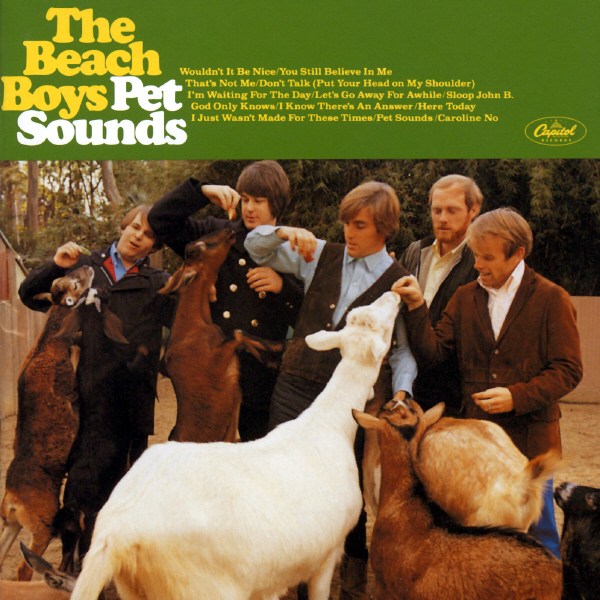
Jardine's
group played several cities where Love's group also performed and there was
actual confusion in the marketplace. After some negotiation, Brother Records,
Inc. sued Jardine for trademark infringement to stop using the “Beach Boys”
trademark. It is important to note that
during this time Jardine was (and presumably still is) a shareholder in Brother
Records, Inc.
Jardine's
defense as one would expect it to be, was fair use (both traditional fair use
and the variation – nomative fair use). As
any law student can tell you "fair use" was not a truly viable
defense in this case because the trademark was not being used in its
descriptive sense; what the court so eloquently described as "boys who
frequent a stretch of sand beside the sea" but rather "in its
secondary trademark sense which denotes the music band – and its members that
popularized California surfing culture."
Thus,
Jardine tried to use the more complex "nominative fair use" defense. As
the court states," the nominative fair use defense acknowledges that it is often
virtually impossible to refer to a particular product for purposes of
comparison, criticism, point of reference or any other such purpose without
using the (underlying) mark". As
the case law suggests, Jardine would not necessarily have a problem referring
to the historical fact of his membership in The Beach Boys but the court found
that his use of the mark in this particular manner "capitalizes on
consumer confusion" and suggests some kind of "sponsorship or endorsement"
by the trademark holder.
I think the
Court was right.
As easy as
it can be to often cast Mike Love in the role of the bad guy in Beach Boys'
mythology, it seems that in this case the corporation (whether controlled by
Love or not) took a very important step in protecting its trademark rights to
avoid dilution of the mark. As such,
this case adds to the growing body of law that practitioners often have to turn
to in order to deal with band members and their trademark issues. Despite all this, one must also remember that
Al Jardine performed with Mike Love, Brian Wilson, Bruce Johnston etc.on The
Beach Boys' 50th Anniversary Tour a couple of years ago. The California saga continues.
Tuesday, December 11, 2012
Advice for (Truly) Independent Artists
survival guide for indie
rockers. Catchy idea. I did a lot of preparatory work on the
subject but for some reason could not pull it off. After a lot of thought, I have decided to
analyze why the concept was flawed.
The reality was that I was trying to promote myself as an
attorney to artists in an environment where the traditional record deal and publishing
deal was rapidly changing. In essence, I was saying to artists, “even though
you’re doing everything on your own, you still need a lawyer.”
It’s a problem of classification. It’s hard to know how
to define an independent artist these days. From what I see, artists who are
signed to what we once called “independent labels” have the same problems as
any artists who signs a record deal – except that the money is smaller these
days and the terms more potentially more draconian. . What
drove the point home to me was a recent article about the band Grizzly Bear in New York magazine. This piece showed in dry economic terms what
the business of being a moderately successful artist in 2012 is like. It’s
really worth searching out. So, of
course, artists like this need lawyers; the game is the same.
So what about artists who are not tied to one particular
company or who are truly releasing everything on their own? What do artists like these need from a legal standpoint. I have come up with several ideas:
1. If you
are in a band you need a band partnership agreement. I have said it before and young bands hate to
deal with these things – but they are extremely important in avoiding problems and
potential lawsuits down the road.
2. You need
to register with BMI, ASCAP or SECAC.
3. If you
are touring it is a good idea to incorporate (and investigate umbrella insurance).
4. If you’re
a band, trademark your name.
5. Don’t
sign anything without having a lawyer review it. These days I have seen that even the simplest
agreements are taking on crazy unnecessary dimensions. Spend a little money to educate and protect
yourself.
6. Register
with Sound Exchange
7. If you
are working with outside producers and musicians, make sure you get an
agreement or at least a release from each of them.
8. Listen to
the Rolling Stones (I threw that in but it’s still a good idea).
Subscribe to:
Posts (Atom)
