Showing posts with label fair use. Show all posts

Monday, January 18, 2016

The Velvet Underdog: The Joys of Transformative Fair Use


One of the perks  of living in Nashville is getting to know people who are not only talented musicians but also highly creative visual artists and I can think of no better example than my friend Brad Talbott.  Brad is a massively-talented designer and illustrator. He has done all kinds of high tech things I don’t understand but has also  designed some of my favorite album covers, among his many achievements. 

            His latest creative venture may be my favorite.  Over the past couple of years Brad has put together mashups where he brings together disparate elements of popular culture (see below).  I can't tell you how much I enjoy these images.  His most recent show back in December was called Rock Toons Mashup Art Show. 

            While I was enjoying the show, chatting with friends and drinking wine out of a box, someone asked me if what Brad was doing constituted copyright infringement.  I rattled off my stock answer "No it's protected fair use" but it occurs to me that lawyers often say this without giving any explanation for this opinion. 

            The fair use section of the Copyright Act embodied in 17 USC § 107 states:

     Notwithstanding the provisions of section 106 (i.e. the exclusive            
rights of the copyright holder) the fair use of a copyrighted work, including such use by reproduction in copies or phonorecords or by any other means specified by that section, for purposes such as criticism, comment, news reporting, teaching (including multiple copies for classroom use), scholarship, or research, is not an infringement of copyright. In determining whether the use made of a work in any particular case is a fair use the factors to be considered shall include-

     (1) the purpose and character of the use, including whether such use is of a commercial in nature or is for nonprofit educational purposes;

     (2) the nature of the copyrighted work;

     (3) The amount and substantiality of the portion used in relation to the copyrighted work as a whole; and

     (4) The effect of the use upon the potential marked for or value of the copyrighted work. The fact that a work is unpublished shall not itself bar a finding of fair use if such finding is made upon consideration of all the above factors.


            It is important to note that this section of the Act was added to the massive 1976 revision of the law but before that it had existed as a judge-made exception to the otherwise strict liability provisions of the Act.  In other words judges realize that there were some times when it was necessary to use portions of other people's copyrighted works in order to comment upon, report upon or criticize said works. 

            Any good fair-use analysis has to take all of the elements of the statute into account, i.e. what is the purpose of the use, what is the nature of the underlying work – how much was used and is the potential market for or value of the copyrighted work affected (it seems that over the last few years the fourth consideration has decreased in significance). 

            Around the time that the U.S. Supreme Court ruled in Luther Campbell's favor over Acuff Rose (the "Pretty Woman" case – a case with significant Nashville connections) courts began to fashion a new interpretation of Section 107 and that is to ask the question – is the new work "transformative"?  As the court said in Campbell v. Acuff- Rose, "The inquiry focuses on whether the new work merely supersedes the objects of the original creation, or whether and to what extent it is controversially  'transformative', altering the original with new expressive meaning,  or message.  The more transformative the new work, the less will be the significance of the other factors, like commercialism that may weigh against a finding of fair use". 

            Admittedly, it took me years to truly understand the concept of transformative use and I didn't really get it until I started looking at the work of Richard Prince, the well-known "appropriation" artist who is a highly-controversial figure in the art world but who has made important contributions to our understanding of transformative fair use.  Famously, Prince was sued by a photographer named Patrick Cariou, after Prince appropriated numerous photographs from Cariou's book Yes Rasta into his own work in a show called Canal Zone.  The lower court ruled against Prince, failing to find sufficient commentary in his work to constitute fair use.  The Court of Appeals rejected this requirement and pointed out that in order to qualify as fair use, the observer must only find the work transformative – a "new expression" employing "new esthetics". 

            It is hard for casual students to understand that Section 107 is a defense to copyright infringement and is not a handy shield for artists.  In other words you might still get sued for copyright infringement but you have a chance to win the lawsuit – not exactly comforting.  However, there have been some recent cases involving the Digital Millennium Copyright Act, which underscore the copyright’ owner’s duty to perform a food faith fair use analysis prior to bringing suit. This string of cases might bring a bit more clarity to the situation.

Having said all that,  I go back to saying that Brad Talbott's work is joyously transformative and I can't wait to see what he comes up with next

Monday, September 21, 2015

Firefly and Fan Art


Have you ever seen Firefly?  Yeah, me neither.  In fact, the only way I know about the TV show was through my wife and her super smart friends.  Nevertheless, I was fascinated to read about a legal skirmish that had broken out over a particular orange and yellow ski cap that one of the show's characters wore.

            Apparently, fans of the short-lived show began knitting copies of this cap and selling them on such websites as Etsy and CafĂ© Press leading Fox Television to send cease and desist letters to the sellers because sales of the homemade caps were interfering with their own licensed version of the cap. 

            An article in last month's American Bar Journal  by Anna Stolley Persky explored the whole complex  area of fan art – where the desires of obsessive fans to replicate artwork from their favorite movies, books  or television shows runs into copyright infringement claims from the creators of those works.  All of this is a little vague.  For example, can a yellow and orange cap actually be capable of copyright protection?  Even so, is the fan's creation a derivative work or a protected fair use?

            This reminds me of stories I heard when I was younger of the Walt Disney Company going after mom and pop bakeries who innocently put Mickey Mouse on a birthday cake or ASCAP going after the Girl Scouts for singing songs around the campfire without a license. It is an interesting dilemma for all parties.   One thing a copyright owner must consider is that by trying to stop the fans from creating fan art they risk alienating their fan base.  Also, this is a question of degree – I still can't fathom why Fox would have a problem with a guy selling a Firefly inspired cap but I can of course understand by DC Comics would sue to stop the sale of unauthorized Batman costumes. 

            The article ends with two very good pieces of advice for those who want to create and market fan art.  Quoting Attorney Ruth Carter, the author states:

First, don't base your entire business on using somebody else's copyrighted work without permission; and

Second look at the history of the copyright holder: Does he or she have a record of going after people who make fan art?

            This is sound advice (especially the first part!)  because at the end of the day if a copyright holder (or trademark owner) has the will and the resources to stop the distribution of fan art, all of the fair use arguments in the world will be of little practical value.  I remember that years ago I represented a gentleman who was marketing a piece of memorabilia associated with    a recently deceased celebrity.  He had received a very serious cease and desist notice. Because of the facts of the case my client had some strong arguments on his side. When I made these arguments to the estate’s  lawyer, he politely listened and then invited me to review the list of recent litigation targets they had gone after.  It was impressive and needless to say my client ceased and desisted. 

            With the proliferation of media outlets and the endless growth of the internet, the rise of fan art culture will continue to grow and thrive, from caps to fan fiction and beyond.  I think this is an area to keep an eye on.

Wednesday, August 19, 2015

Bad Vibrations


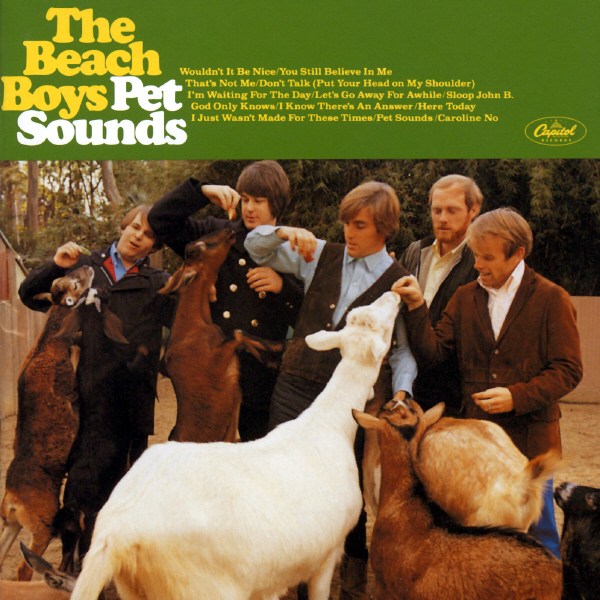
I had the good fortune to see Brian Wilson perform live this summer with both Al Jardine and Blondie Chaplin.  The show reinforced the brilliance in all eras of the Beach Boys' career.  However, you can't ignore the fact that there are essentially two factions of this band touring at the moment, the Brian Wilson Gang and the Mike Love-Bruce Johnston Gang.  Between this odd occurrence and seeing the intense Brian Wilson biopic, Love and Mercy, I began to think that one could write an entire scholarly book on the various legal and business disputes that the Beach Boys have been involved in over the past half century. 

            I don't think I will ever have the time to go down that rabbit hole but I did come across an interesting case while doing some research for a client involving the aforementioned Al Jardine. 

            A decade ago the internet was abuzz with the news that Mike Love had supposedly sued Al Jardine to keep him from using the name "The Beach Boys" to promote a solo tour.  The case, Brother Records, Inc. v. Al Jardine, turns out to be a bit more complicated than that.  Each founding member of The Beach Boys (or, in the case of Dennis and Carl, their estates) is a shareholder in Brother Records, Inc.  Recognizing that The Beach Boys' trademark was a valuable asset but also that some of the surviving members did not want to tour (or tour together), the corporation decided in 1998 that each member could have a non-exclusive license to tour using the "Beach Boys" name if certain terms and conditions were met – Mike Love took a band on the road under those terms. 

            Apparently, Al Jardine decided that if he used a variation of the name, "Beach Boys Family and Friends" he could tour either without a license or upon a different royalty arrangement with the corporation. 

            Jardine's group played several cities where Love's group also performed and there was actual confusion in the marketplace. After some negotiation, Brother Records, Inc. sued Jardine for trademark infringement to stop using the “Beach Boys” trademark.   It is important to note that during this time Jardine was (and presumably still is) a shareholder in Brother Records, Inc. 

            Jardine's defense as one would expect it to be, was fair use (both traditional fair use and the variation – nomative fair use).  As any law student can tell you "fair use" was not a truly viable defense in this case because the trademark was not being used in its descriptive sense; what the court so eloquently described as "boys who frequent a stretch of sand beside the sea" but rather "in its secondary trademark sense which denotes the music band – and its members that popularized California surfing culture."

            Thus, Jardine tried to use the more complex "nominative fair use" defense. As the court states," the nominative fair use defense acknowledges that it is often virtually impossible to refer to a particular product for purposes of comparison, criticism, point of reference or any other such purpose without using the (underlying) mark".  As the case law suggests, Jardine would not necessarily have a problem referring to the historical fact of his membership in The Beach Boys but the court found that his use of the mark in this particular manner "capitalizes on consumer confusion" and suggests some kind of "sponsorship or endorsement" by the trademark holder. 

            I think the Court was right.


            As easy as it can be to often cast Mike Love in the role of the bad guy in Beach Boys' mythology, it seems that in this case the corporation (whether controlled by Love or not) took a very important step in protecting its trademark rights to avoid dilution of the mark.  As such, this case adds to the growing body of law that practitioners often have to turn to in order to deal with band members and their trademark issues.  Despite all this, one must also remember that Al Jardine performed with Mike Love, Brian Wilson, Bruce Johnston etc.on The Beach Boys' 50th Anniversary Tour a couple of years ago.   The California saga continues. 


Sunday, April 26, 2015

You Gotta Have a License


This story would be funny if the underlying topic was not so serious and important.


I was recently interviewed by a reporter for the Atlanta Daily Report for a story regarding a local organization that had to take down a video on a website devoted to the cause of suicide prevention.  The reason for the takedown was that the organization was using a version of the Fray’s hit song “How to Save a Life” without obtaining a license from the band’s music publisher Sony Music.  Despite the organization’s worthy public service goals they could not utilize a version of the song in the video without negotiating a synchronization license. The video itself dealt with raising awareness of lawyer suicide, which I learned is a very real and serious problem; quite possibly an epidemic.

I don’t know how this association ran into this problem in the first place.  It could be that they made the common mistake of thinking that the Fair Use exception in the Copyright Act covers all non‑profit uses of music; it does not. I am routinely contacted by non-profit organizations or other services who are seeking advice in using music to promote their various causes and they are often surprised to learn that there is a cost associated with the use. The fact that a proposed use is non-commercial is only one of the four elements of the fair- use analysis in the Copyright Act.

The ironic part of the whole story is that the organization in question was  the State Bar of Georgia – and I poked fun at them by saying  “there are a lot of talented entertainment lawyers in Atlanta”. However, the Bar should be applauded for bringing this serious issue to light.